Energy storage system supplier
An energy storage system supplier can quote a block that still fails the project interface. This guide lists the electrical and physical checks to write down before that quotation is treated as comparable. VoltLink Supply does not approve the interface. Qualified reviewers do.
Keep each line of a bill of materials separate. A container, a bidirectional inverter, a transformer and a site controller can come from different quotations. Mixing them into one assumed package hides exclusions.
Fields still to confirm
- Rated power and usable capacity of the quoted model
- DC voltage window and maximum system voltage
- AC voltage, phase and current at the point of connection
- Protocol between the battery management system and the site controller
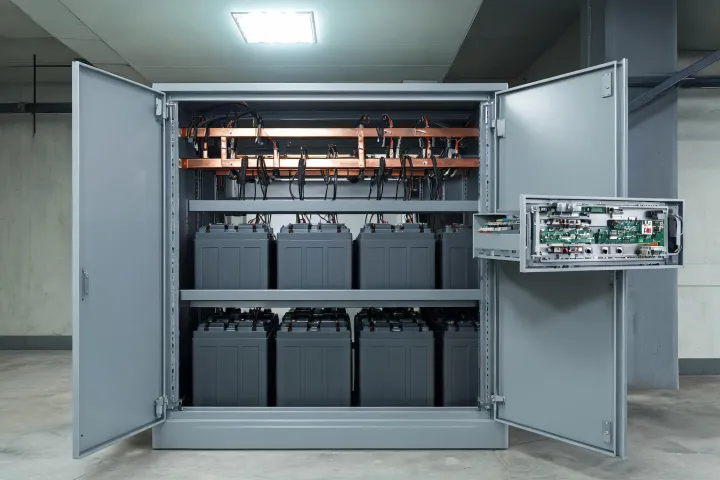
Files that must name the model
- Datasheet. Usable kWh, rated kW, round-trip efficiency and the test basis.
- One-line or interface sketch. Where the bidirectional inverter sits, and whether the DC bus is shared with PV.
- Communication note. Points the battery management system exposes, and any SCADA map the supplier will provide.
- Environmental sheet. Enclosure rating, operating temperature and the thermal management method.
- Compliance questions. Ask whether a current safety listing and a lithium battery transport summary exist for this model.
A public overview such as the solar-plus-storage primer can suggest questions. It is not a product approval and it is not a price.
Interface decisions with two readings
- AC-coupled. The storage block connects on the AC side. That can suit a retrofit where existing PV inverters stay in place and the storage is controlled on its own. Ask for the AC voltage, the fault-current contribution and whether export is limited.
- DC-coupled. Storage shares a DC bus with PV. That can remove a conversion stage on a compatible new build. Ask for the DC voltage window, MPPT limits of the shared converter, the DC-to-AC ratio, and what happens when PV voltage and battery voltage disagree.
- Grid-forming inverter versus grid-following. One mode can support a planned island. The other follows a live grid. The supplier should state which mode the quoted firmware allows. The utility still decides what may operate.
- Unit price versus delivered scope. A lower container price can be attractive when cables, the transformer, fire detection and freight are truly included. A higher line can be the comparable offer when those items were missing. Record both and do not convert the gap into a savings claim.
Cycle life needs a temperature, a C-rate and an end-of-life capacity. Depth of discharge changes usable capacity. If those three are blank, the energy number is not ready to compare. Thermal management belongs in the same note: liquid and air paths derate differently at the same ambient.
Worked question set, not a finished design: a buyer asks an energy storage system supplier whether a 1500 V DC class container can sit on a PV bus whose open-circuit voltage reaches that class in cold weather, whether the quoted power conversion is inside the container, and which enclosure rating applies outdoors. The answers stay attached to the model number. See also cost columns and project uses.
Each numerical entry below is a hypothetical review question, not a supplier rating or a validated design. IP and NEMA ratings require separate evidence; neither proves the other. Request model and firmware identifiers, record test conditions and supplier deviations, then have the responsible reviewer mark each line accepted, rejected or open with a document reference. Voltage overlap alone does not establish compatibility.
| Interface check | Value the supplier should tie to the model |
|---|---|
| Maximum system voltage | 1,500 V DC |
| Open-circuit voltage | 1,480 V at -15 C on the PV strings |
| MPPT window | 500 V to 1,300 V if one converter is shared |
| DC-to-AC ratio | 1.25 on the PV side of a DC-coupled sketch |
| Rated power | 1,000 kW at 40 C |
| Usable capacity | 2,000 kWh at 80 percent depth of discharge |
| Battery DC window | 700 V to 1,100 V |
| AC point | 34.5 kV via a separate transformer |
| Current | 1,200 A DC bus question |
| Round-trip efficiency | 89 percent on a 0.25 C cycle |
| Cycle life | 8,000 cycles to 70 percent at 25 C |
| Thermal management | Liquid, 12 kW peak auxiliary |
| Enclosure rating | IP55, NEMA 3R coastal question |
| Battery management system | IEC 61850 or Modbus, one of them named |
| Bidirectional inverter | Grid-forming inverter capable, or grid-following |
| SCADA | 1 second refresh, 60 points |
| String current | 15 A per PV string, outside the storage quote |
| Module efficiency | Recorded on the PV line, not borrowed for the battery |
| Maximum power voltage | PV Vmp at 40 C, still a designer input |
| Step limit | 100 ms question on power setpoint |
| Altitude | 2,400 m, derate table requested |
| Fault contribution | 1.1 times rated current for 1 second, supplier to state |
| Clearance | 1 m sides, 2 m doors |
| Mass | 30 t installed |
| Noise | 70 dBA at 10 m |
Send the interface questions with the brief
Request factory quotes with the voltage, the coupling path you are considering, the quantity and the US destination. Mark unknowns as open. The procurement brief repeats the document list in article form.