Energy storage system suppliers

Energy storage system suppliers can be compared when the project use is translated into ratings, interfaces and a destination. VoltLink Supply writes that translation with the buyer. It does not appoint a supplier, certify a site or claim a factory relationship.

Start from the duty the equipment must serve. A two-hour peak-shave block and a short ride-through block can share a product family and still need different rated power, usable capacity and thermal management.

What the supplier is asked

Specification, quantity, US destination and requested timing. Then the interface questions for that use: voltage, phase, enclosure rating and the battery management system points the owner already monitors.

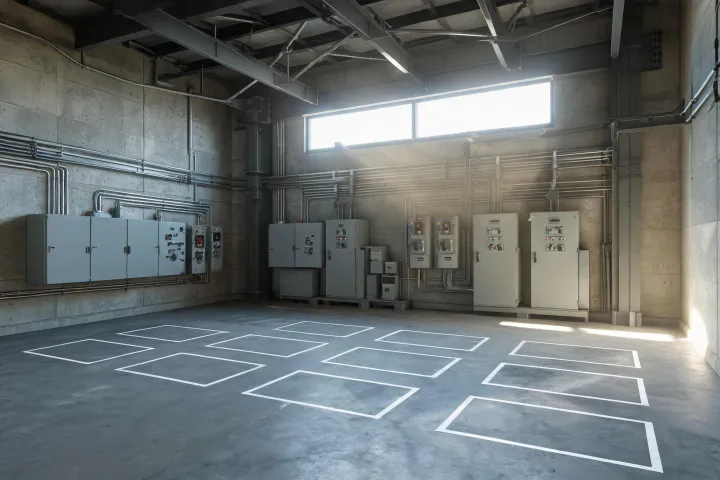
Industrial rooftop electrical room with space marked for a storage lineup

Project contexts and the RFQ unit

Each card is a buying situation. None of them is a case result.

Commercial roof and meter

Application: demand charge management beside an existing service. Interface questions: 480 V or another point of connection, available fault current, and whether solar inverters already occupy the switchboard. RFQ unit: one AC-coupled block or a DC-coupled addition, stated as a choice to confirm.

Ground-mount collector

Application: storage at a PV collector. Interface questions: DC voltage class, DC-to-AC ratio of the plant, and whether a grid-forming inverter mode is requested. RFQ unit: containers plus the power conversion the quotation includes.

Fleet charging yard

Application: cap the service while vehicles charge. Interface questions: charger power, dwell hours, and communication with the charging controller. RFQ unit: kWh of usable capacity sized from the dwell, not from a catalog slogan.

Plant process bus

Application: support a line that cannot drop. Interface questions: ride-through versus hours, harmonic limits, and enclosure rating for the room. RFQ unit: rated power at the required duration, with thermal management called out.

Distributed node

Application: a site that reports to an existing SCADA or energy management screen. Interface questions: protocol, points list and who configures them. RFQ unit: the storage block plus a written communication scope, kept separate from engineering sign-off.
Comparison fields shared by every use

Specification

Usable capacity, rated power, chemistry and the depth of discharge behind the energy figure.

Quantity

How many identical blocks, and whether spares are a separate line.

Delivered scope

Freight to the US destination, cables, and commissioning boundaries.

Supplier documents

Datasheet and drawing for the quoted model, plus listing or transport files if you ask for them.

Central or string conversion can reduce equipment count on some large layouts. Module-level conversion can support per-module monitoring where shading or service access justifies it. For storage, that architecture question is adjacent: record it when PV and storage share a design, and do not treat either side as a default.

AC coupling can keep a retrofit independent of the existing PV inverters. DC coupling can reduce a conversion step when the new DC bus, maximum system voltage and inverter ratings agree. Ask energy storage system suppliers to mark which path the quoted model uses.

A lower unit price can be the right award when scope matches. A delivered-scope reading can be the right award when freight, accessories and documents were missing from the cheap line. Keep both readings. Link the cost sheet on quote review and the names on inquiry options.

The numbers below are independent hypothetical inputs across different project contexts, not one system design or achieved performance. They are not recommended clearances, local code limits or supplier specifications. Replace them with project requirements and obtain qualified review before award.

UseNumbers to capture before suppliers answer
Commercial meter480 V service, 15 minute demand interval, 300 kW cap
Peak window3 hours, 900 kWh usable, 90 percent depth of discharge
Ground-mount collectorDC-to-AC ratio 1.3, maximum system voltage 1,500 V
PV busOpen-circuit voltage checked at -10 C
Fleet yardSix 180 kW chargers, 45 minute dwell
Storage beside chargers1.2 MWh usable, rated power 600 kW
Process busRide-through 2 seconds, then 30 minutes at 400 kW
RoomEnclosure rating IP20 indoors, 20 C to 35 C
Thermal managementAir, 4 kW rejected to the room
Distributed nodeSCADA poll every 1 second, 24 points
Battery management systemSeparate from the site controller
Bidirectional inverterGrid-forming inverter mode listed as a question
Round-trip efficiencyAsk for 1 full cycle at 0.5 C
Cycle lifeState 25 C and the remaining 70 percent end point
Quantity1 block on the roof, 2 blocks at the yard
Altitude150 m coastal site
Fault current40 kA on the 480 V board
Clearance3 m from the property line
Noise60 dBA at the fence
MPPTRelevant when DC coupling shares one converter
String currentLeft for the PV designer, not guessed here
Module efficiencyNot a storage rating; record it on the PV line

Send the project use with the ratings

Request factory quotes after the use, the interface questions and the open approvals are written down. The procurement brief is the longer checklist. The compatibility guide stays on electrical interfaces.

Optional budget and supplier preference help us compare your priorities. You do not need an existing quotation.

Read the privacy policy before submitting your business contact details and procurement brief.